THY KILLING HAND
The genesis of Thy Killing Hand appears to have partaken of the nature of a sudden visitation: when inspiration came for your first demo, Scarlet Ceremonies, every one of its songs was brought forth within the compass of a single day in the autumn of 2022. One is therefore tempted to ask, quite simply: what occurred upon that fateful autumn day?
TKH: In my case, this kind of work ethic is nothing extraordinary. This method is based on complete creative abstinence. Basically, I don’t compose, I don’t practice playing any instrument, and I don’t rehearse for a certain period of time. Sometimes predetermined, sometimes not. When the right moment comes, every encounter with an instrument results in a new composition, whether complete or just a fragment of one.
After a break that can sometimes last several months, I’m able to create a substantial amount of new material. That was the case of the Scarlet Ceremonies demo. I did have a few riffs hidden away in a drawer from earlier, but most of the music, as well as the lyrics, came to me during a solitary hike to the infamous Łysa Góra (Holy Cross Mountain), located several dozen minutes from where I live. So I decided to take a few-hour trip through the forests, completely on my own. As I walked, ideas started flowing automatically. I wrote most of them down on a piece of paper and later used them as lyrics for the first demo. I was so excited by this release of creativity that, when I got back home, I picked up my guitar, and that’s how the vast majority of the material for Scarlet Ceremonies came into being. A few weeks later, we arranged a rehearsal with the drummer and recorded it. The remaining overdubs were recorded several weeks later.
A general observation concerning Thy Killing Hand is that the band sounds old. Not merely retro, for the latter is more often than not a parody of that which once possessed genuine life, but old in a deeper and more authentic sense. A recording such as Ixaxar, your second demo, might almost – save, perhaps, for certain effects – have found its place upon one of the tape-trading cassettes that reached me sometime in the mid-1990s.
TKH: Tired of the modern, polished sound, or quite often, of sound that is deliberately made worse, we decided to create something genuinely raw. Something that would strike a nostalgic chord in us. I don’t want to resort to clichés here, like invoking the spirit of past eras, but at least in terms of the sound, I think we managed to achieve what we set out to do. Regardless of how these recordings would be received, and driven purely by our own enjoyment, we decided to record both demos partly live, with a great deal of improvisation. We were satisfied with the result enough to decide to release them on cassette, while being fully aware that this was still far from the peak of what we wanted to achieve.
I do not know whether we are at liberty to speak of the bands in which you have taken part during the past twenty-two years or thereabouts; suffice it to say that you have scarcely been idle throughout that time.
What these various undertakings shared was a firm rootedness in the past, without ever being wanting in creative ambition – or, indeed, in a certain freedom of invention. One never gains the impression that you sought to restrain yourself when seized by a particular idea, even when it lay beyond the customary canon of the genre. In this respect, one might argue that you have remained entirely faithful to the spirit of the 1990s, when many bands still placed the highest value upon possessing a character distinctly their own.
TKH: Again, I don’t want to sound too nostalgic, but considering the sheer number of bands around these days, there are surprisingly few that actually try to find their own identity. I mean this in terms of their music, lyrics, and sound alike. It seems that quality has definitely been replaced by quantity. Young bands are chasing easy success by following well-trodden paths, losing their identity in the process. When Black Metal was a young, nonconformist genre, it was seen as a form of rebellion and an attempt at self-expression. Bands could record in the same studio with the same producer and still end up sounding unique. Today, everything seems to be the other way around. Bands don’t want to offend anyone with their message; they produce music designed to have the best possible chance of gaining traction on YouTube. Even producers have become lazy, churning out the same formulaic work. In this context, we genuinely feel as if we’re doing something avant-garde, with our necro sound and our attempt to incorporate something unconventional into our music.
One such trait is the use of undistorted guitars in passages of a markedly sombre and evocative character, which, to my mind, lend your music a distinctly cinematic quality. Would I be altogether mistaken in tracing these elements, at least in part, to the occult rock of the 1970s, and perhaps even to some of the rawer Deathrock or Gothic Rock recordings of the following decade?
TKH: Absolutely, you’re right. First of all, we strive to paint pictures in the listener’s mind through our music and try to capture that theatrical, surreal atmosphere. Some time ago, after taking certain psychoactive substances, I became obsessed with the idea of creating something along the lines of what I’m describing here. Something whose essence would touch upon the Lovecraftian story The Music of Erich Zann. I don’t know whether we’ll be able to achieve the effect we’re aiming for, but we certainly won’t stop trying. Secondly, we draw inspiration from the genres you mentioned, such as Gothic rock from the ’80s and early ’90s, as well as the even earlier occult rock of the late ’60s and ’70s. There’s nothing particularly unusual about that, since many significant bands from the Black Metal scene draw from these influences as well. Another source of inspiration worth mentioning is Italian music, particularly bands such as Goblin, Jacula, and Black Hole, and above all Paul Chain, both his time with Death SS and his solo work. The atmosphere created by these bands came not only from the use of clean guitars or eerie keyboards, but also from something intangible, something that simply cannot be transcribed into musical notes.
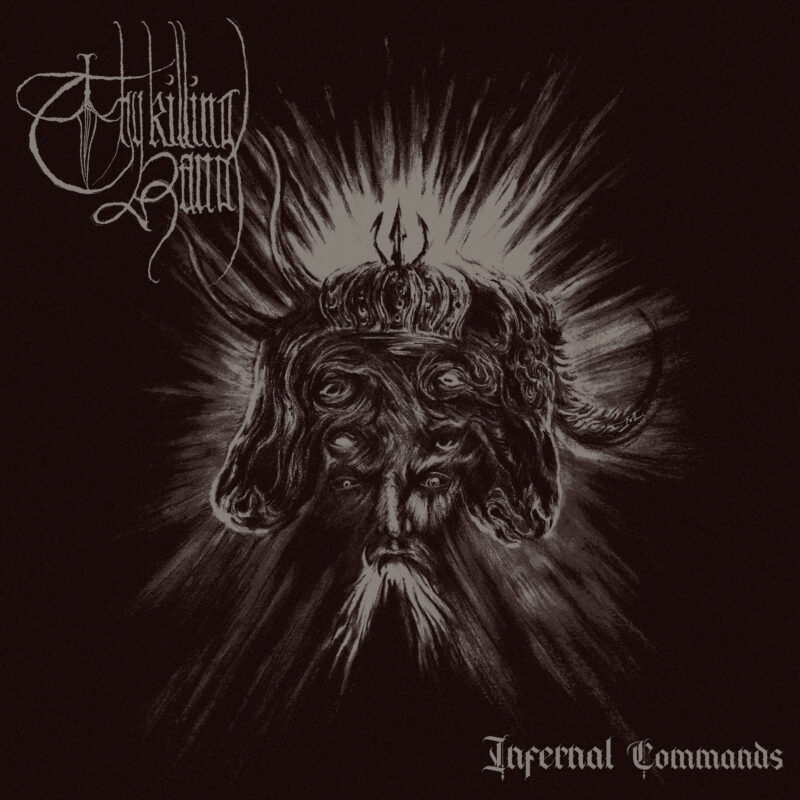
In the spirit of my preceding question, I must confess that I was occasionally reminded of the atmosphere peculiar to the soundtracks of certain classic horror films of the 1970s and 1980s. Not necessarily in their instrumentation, but in the quality of their menace: something profoundly disquieting and sinister, beneath which the sweet lullaby of damnation may be heard softly sounding. At other times, the music assumes an almost epic sense of tragedy, as in the grandiose conclusion to On a Silver Globe, the opening piece of your debut album, Infernal Commands, released some months ago through EAL Productions. There is an experimental aspect to Thy Killing Hand, isn’t there?
TKH: I touched on this subject a little earlier, but let’s take a closer look at it. We are absolutely open to all kinds of experimentation, improvisation, and avant-garde ideas in the best sense of the word. In fact, we believe that improvisation and primal instinct should guide our creative process, even at the expense of imperfections. One of our main principles, when we discussed the direction we wanted to take, was to have absolutely no boundaries or genre restrictions, to leave as much room as possible for experimentation and for breaking out of established patterns. In other words, creating an atmosphere of horror in an unconventional way. Knowing our roots, we knew that everything would ultimately come down to raw, crypt-like Black Metal anyway, but we didn’t want to get stuck, so to speak, in a narrow niche. As I mentioned, theatricality and a certain kind of painting with sound are things we strive for and draw inspiration from. Personally, I draw heavily from films, their soundtracks, ideas, and quotes and I would like our music to have that kind of character. Artists such as Goblin, Angelo Badalamenti, John Carpenter, Wojciech Kilar, and many others continue to put me in a state of mind that carries a very profound meaning for me.
We shall turn to Infernal Commands shortly, but I must first ask to what extent On a Silver Globe is connected with Andrzej Żuławski’s monumental yet mutilated film of the same name.
To state the matter briefly, the film depicts a nascent society transmuting a misunderstood history into religion, fashioning a messiah and ultimately putting him to death upon the cross. The work itself was left unfinished following the intervention of the Polish communist authorities and was later presented with its wounds still plainly visible. What survives is consequently at once an artefact and a ruin. As this composition stands at the threshold of the album, are we to regard the same notion, of artefact and ruin, as extending over Infernal Commands in its entirety?
TKH: Much like with the title I am Third Revelation, which is a quote from another film, this title was borrowed from Żuławski’s film, even though it has absolutely nothing to do with it. To be completely honest, when I received these questions, I had to revisit On a Silver Globe. It is not Żuławski’s finest work. In fact, it’s difficult to determine where the plot is actually heading, perhaps because we were left with an unfinished work, and the narrative doesn’t really fill in the missing scenes. It’s hard to escape the feeling that, in this case, the artistic aspect ended up overshadowing the very essence of the film. Visually, however, I consider it to be of an exceptionally high standard, which is something this director has accustomed us to. The same can be said of the soundtrack.
As for the idea behind the album, the tracks To Receive the Final Task and Enemy are more representative of it. In other words, a plea and a response.
The sound of Infernal Commands impressed me greatly. It possesses a remarkable sense of reality: the drums ring wholly true, and one perceives throughout a scrupulous attention to detail, one which lends the record a powerful and coherent sonic character. The music is nevertheless allowed ample room to breathe. It is, in every respect, the antithesis of sterility. Thy Killing Hand consists of but two members, yet the album sounds almost as though it had been recorded live. Were the drums and rhythm guitar perhaps committed to tape simultaneously? What else can you reveal about how you approach a recording session?
TKH: While recording Infernal Commands, we decided against recording it live, mainly because we wanted to put more effort into the sound itself. We recorded everything ourselves, without a sound engineer, so we were aware that we might lose some of the finer details in the process. The production of the album was also entirely our own work. Having some experience in this field, we didn’t want to hand the material over to anyone outside the band for mixing. Perhaps the sound of the album differs somewhat from contemporary standards, but we knew exactly what we wanted to achieve, despite our limitations in terms of equipment and technical skills. The mastering was the only part done outside the band, at Equinox Studio, which added considerably more power to the compositions. The actual recording of the tracks took around a dozen hours in total, spread over several weeks. We also asked a friend to record some tuba sounds, which only intensified the surreal and grotesque character of the album.
Many contemporary recordings pursue clarity to such an extent that all mystery is finally disinfected. Yours proceeds in almost the opposite direction: the bass possesses an uncommon physical presence, the cymbals can be severe, the voice occasionally assumes proportions greater than the instruments surrounding it, and the reverberation transforms the recording space into an architecture of its own. One might be tempted to describe such a production as “primitive,” when in truth it possesses all the vitality of a living and breathing organism.
TKH: We have no problem with someone describing this sound as primitive, in fact, quite the opposite. While mixing, we wanted to capture the primordial spirit of ’80s and ’90s Black Metal, and I think we managed to do that. I’m fully aware of my limitations when it comes to mixing, as I’m entirely self-taught. I simply don’t connect with the modern Black Metal sound, and I can’t imagine TKH sounding that way under any circumstances. However, we decided that having our own character and preserving the primitive nature of the sound was more important to us than readability or clarity. There are records that reveal their full potential precisely because of their primitive sound. Without looking too far, I’d point to SVEST’s Urfaust as an example. On the surface, it sounds like pure cacophony and chaos, but once you become accustomed to the sound, it reveals its full potential and, as you so aptly put it, reveal its mystery.
The two individuals behind Thy Killing Hand have thus far remained unnamed. What purpose has this anonymity served? Was it intended, perhaps, to efface the personalities of the creators, so that the listener might encounter in their work something greater than the two men who brought it into being?
TKH: We don’t reveal our identities because we want our music to be judged on its own merits, rather than as a project associated with any particular person. That kind of marketing is of absolutely no interest to us.
I’ve always found it extremely amusing how much attention people pay to musicians’ aliases, appearance, or clothing. They reduce art to the level of tabloid gossip, or come up with all sorts of wild theories about a band’s lineup, the personalities of its members, or their behavior, without having the slightest idea of what is actually going on beneath the surface. Our identities are completely irrelevant. We hope the music will speak for itself, regardless of who is behind it.
The title Infernal Commands implies that something speaks and something else obeys. There is a hierarchy. When composing, do you experience yourselves as sovereign authors imposing form upon material, or as recipients attempting to give form to something that has already imposed itself upon you?
TKH: From an artistic point of view, the concept of Infernal Commands indeed suggests the performers as instruments, or vessels, through which forces enter this world, so I like your interpretation as well. Specific instructions, or seeds of ideas planted with a particular purpose. I have a very specific way of composing music, which I described earlier. I usually have the feeling that ideas or melodies are somehow delivered to me. That’s why I only compose when I’m ready for it, rather than when I’m pressed for time or simply happen to feel like it.
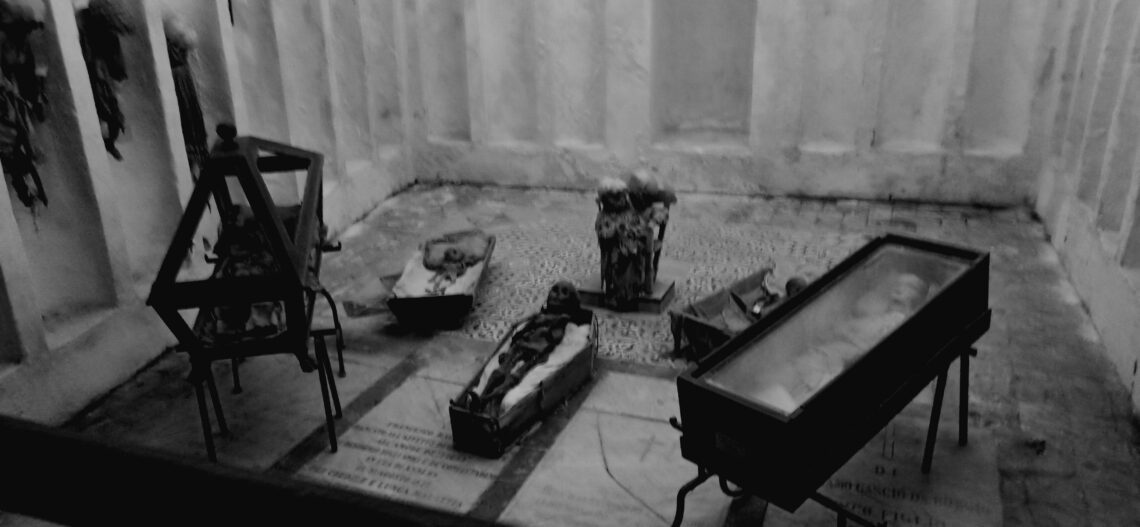
Black Metal has frequently confused violence with velocity. Infernal Commands, however, is at its most menacing when it refuses to hurry. The faster passages feel almost like convulsions occurring inside a much slower organism. The essential sensation is one of approaching mass and inevitability. Was this rejection of constant speed a deliberate reaction against one of the genre’s most exhausted reflexes? What can slowness express about Evil, dread or ritual that sheer aggression cannot?
TKH: First of all, you have to understand that form is completely irrelevant to me. That’s why I believe that both fast, violent music and slow, trance-like tempos can lead to the same destination. The same goes for technique: both primitive and technically advanced music speaks to me as a listener, as long as there is darkness at the end of it, and a trace of His hand. With TKH, we chose this particular form because that was the intention behind it. There are already enough fast bands on the scene, and for us, within this particular concept, slow, even doom-oriented playing was the natural choice. Slow, ritualistic, almost tantric music creates a very specific state of mind and evokes visions, while the dynamics and occasional bursts of speed intensify the feeling of crawling chaos.
Something of NECROMANTIA and BEHERIT may be discerned throughout Infernal Commands (the magnificent opening riff of “The Great Beyond” being but one among several examples when it comes to BEHERIT’s mark).
Are you seeking to return to a vanished historical moment, or rather to pursue certain paths which those bands first opened, yet never explored to their utmost extent?
TKH: Both of these bands are a huge source of inspiration for us. Having their own style, being nonconformist, and following their own path, these were, and still are, the qualities that set both bands apart. Necromantia’s demos are probably my favorite and, in my eyes, an unattainable benchmark for what we might call avant-garde Black Metal. The same goes for Beherit, particularly Drawing Down the Moon, Engram, and the wonderful EP Celebrate the Dead! I would also mention the early recordings of Unholy and Sigh, which perfectly embody my idea of what TKH should sound like. Combining a certain kind of avant-garde approach with raw Black Metal is exactly what we would like to play. If I’m being honest, I hope that we’ll manage to fully find our own identity as well, and that the references to the bands mentioned above won’t be quite so obvious.
Bones Resound refers explicitly to the Witch of Endor, whom Saul consulted after God had ceased to answer him through dreams, prophets or the customary sacred means. What interests me particularly in this episode is that forbidden knowledge becomes efficacious at the very moment when sanctioned revelation has fallen silent. Does the song concern man’s willingness to seek truth among the dead, in the underworld and within forbidden realms, when Heaven itself refuses to speak?
TKH: Most of the lyrics on Infernal Commands are written from the protagonist’s point of view. They are a record of his feelings, struggles, and actions at a particular moment. Our intention was not to convey our own philosophy, but rather to focus on the form and structure of the lyrics. Of course, there are personal observations and reflections woven in here and there, but that doesn’t necessarily need to be discussed here.
In the case of Bones Resound, it is more about presenting oneself and one’s necromantic abilities than about a philosophical search for answers to troubling questions. In that case, the lyrics had to be written from Saul’s point of view. The Witch is fully aware of her abilities and, in a sense, bargains with Saul, convinced that she is capable of answering his questions. As a little curiosity, the idea for the form of this particular lyric was inspired by King Crimson’s I Talk to the Wind.
In the Book of Tobit, Sarah is tormented by Asmodeus, who slays seven husbands in succession before any of the marriages may be consummated. Enter, Asmodeus, however, appears to invert this order of things: the woman’s sorrow is transmuted into vengeance, the ancient fetters are broken, and the demon is summoned forth to strike down the lover. Have you deliberately transformed Sarah from the passive victim of Asmodeus into the very author of his entrance, and if so, why that perspective?
TKH: This lyric is not inspired by a biblical parable, but rather by a medieval case of possession. Dominated by her lover/housband and bound by the constraints of tradition, a woman who naturally seeks the darker side of things, or simply freedom, has had enough of playing a passive role in the relationship.She does not want to devote her life to being a provider of offspring and a keeper of the domestic hearth. Instead, she wants to live her life deliciously. She decides to rid herself of both her lover/husband and her earthly existence by summoning the demon Asmodeus.
She imagines her revenge, as well as its consequences, and a life beyond the traditional order. This kind of perspective is quite common in esotheric literature, where the woman symbolizes the desire to turn away from God and live, perhaps even if only for a very short time, free from the constraints of morality, religion, and marriage.
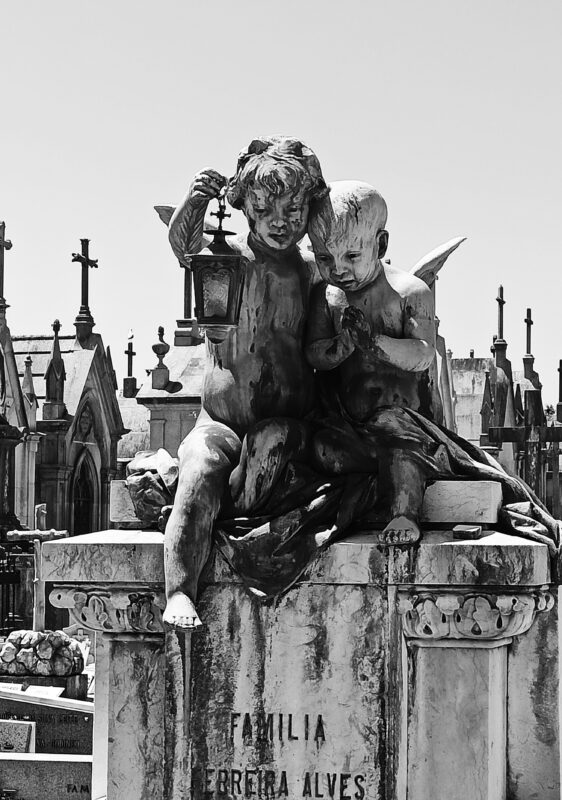
If I am not mistaken, To Receive the Final Task is spoken in the person of Gilles de Rais. Few figures present so troubling a conjunction of history and mythology: Marshal of France, companion-in-arms to Joan of Arc, accused murderer of children, occultist, penitent and, in the centuries that followed, an almost archetypal embodiment of aristocratic Evil. Were you drawn principally to the historical man, whose trial and guilt remain matters of dispute, or to the monster fashioned from him by posterity? And does such historical uncertainty lend the figure greater power by permitting the imagination to inhabit that which fact can no longer conclusively determine?
TKH: I’ve written several lyrics about Gilles de Rais throughout my life, for various projects, because I’ve been fascinated with this figure ever since I was young. In this particular case, the lyrics were inspired by the subject, viewed partly through the lens of the book Là-Bas. Much like Durtal, the book’s protagonist, I feel a deep aversion to modern times and contemporary society, along with an indefinable nostalgia for the Middle Ages, when evil seemed to thrive. All kinds of nefarious practices carried out under the cover of night, in hidden places or castles, by aristocrats or members of the clergy, have always fascinated my imagination.
It all happened so long ago that no one is able to verify it anymore, and the facts have been obscured or distorted by time. This leaves a great deal of room for fictional interpretation and opens the door to fascinating lines of thought, which I often spend hours exploring. As for the lyrics to this particular song, it doesn’t matter how much of it was true and how much was legend, because the text is concerned with the dilemma and meaning behind all the deeds Gilles de Rais may,or may not, have committed. The protagonist of the lyrics has, in a sense, grown weary of his endless attempts to attain occult perfection at any cost. He is waiting for a sign, or perhaps an instruction, that he can follow in order to finally achieve his goal.
Alchemy appears repeatedly throughout the album. In On a Silver Globe, knowledge, squandered wealth and the desire to escape the ravages of time are closely entwined. The Great Beyond presents an “Alchemical Prism”. The speaker in To Receive the Final Task admits that he sought gold and found none. One might conclude that alchemy led to failure – or could it be that the actual transformation was the one turning the seeker into something monstrous?
TKH: Both On a Silver Globe and The Great Beyond are about Master Twardowski, a Polish literary figure whose archetype was Doctor Faust. A half-mythical, half-historical figure, he became the subject of countless legends and appeared in various literary works from the 19th century onward. The legends surrounding Master Twardowski, however, had already been circulating much earlier, as far back as the 16th and 17th centuries. The first of these pieces deals with helplessness in the face of an approaching end the repayment of a debt, namely, giving one’s soul to the Devil. The second, meanwhile, tells the legend of an attempt to summon the deceased wife of King Sigismund II Augustus, which ends in failure and an encounter with madness and death. As for the lyrics you mentioned, that is indeed the case. The protagonists wanted to attain the Absolute, or the Great Work, so desperately and regardless of the cost that they failed to see the effect Alchemy was having on them. They became corrupted, depraved, antisocial, and greedy, willing to make any sacrifice necessary to achieve their goal. It’s somewhat like us, who are constantly searching.
The album closes with “Enemy.” What struck me particularly is that rebellion and obedience, knowledge and ignorance, blasphemy and worship are all held in equal contempt. Does the song suggest that neither submission nor defiance can command the divine gaze, and that every human attempt to establish communion with the Absolute is doomed to the same futility?
TKH: The lyrics were inspired by Mark Twain’s unfinished novel The Mysterious Stranger, which brilliantly exposes human hypocrisy and pettiness. The song portrays God/Satan’s contempt for both his followers and those who do not believe in him. Humanity means absolutely nothing to him. It makes no difference whether someone worships him or not, they are condemned to his contempt. Man is nothing but insignificant dust, a toy that believes it can influence his intentions, when in reality it is merely a loud, meaningless animal. Whatever image his followers or his opponents may have of Him, they are mistaken. In truth, He is not a being who brings joy or solace. He is the Enemy.